
PR Newswire
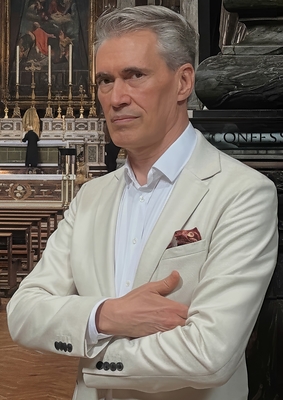
The English Chamber Orchestra has a new trustee. Dr. phil. Donatus, Prince of Hohenzollern, is a prominent figure in British musical life. We ask what plans he has for this flagship of British culture. Anne Robertson of Citrus Tree Productions Limited, London, leads the interview.
Anne Robertson (AR): You have, as is well known, been involved for many years with several charities of national standing. You are still ambassador for the Purcell School in Watford, the oldest elite school for outstanding young musical talent; patron of Arts4Dementia; patron of Blind Dog Rescue; founder of the Teahouse Baroque musicians' network, etc. You also have a history of supporting three of the major orchestras in London, the Royal College of Music over years through a series of scholarships helping skilled young people, and other institutions that make important contributions to society. Why did you decide now to be involved with the English Chamber Orchestra? What are your plans?
Dr Prince Donatus (PD): Firstly, you will not expect me to say that the English Chamber Orchestra is the best of all the top-notch orchestras and that the latter are inferior in their quality. We have a considerable number of orchestras in the United Kingdom that belong to the world's top league. All together, they keep Europe's musical culture alive, which the world envies, and turn it into an effective experience at the highest level. Experience is the most important dimension in the formation of our consciousness, more important and more powerful than all analysis, as it is visible in the experiential and radiant significance of the monarchy. The ECO has historically particular competence in this dimension of our existence.
AR: You have been awarded a doctorate in philosophy with the highest honours, and for your epistemological and philosophy-of-science work, Cogito ergo credo ('I think, therefore I believe'), you have the credentials of leading intellectuals. Give us a keyword!
PD: Epistemology is not a humanities discipline but belongs to science, because it investigates the perceptual capacity given to human beings as their natural asset. The two approaches to reality, analysis and (sensory) experience, are opposing but coordinated 'magisteria.' Every one of us lives through this coordinated, unified formation of consciousness. But today we believe that only what can be proven is real (the credo of materialism, which turns the world into a world of things), and that sensory experience is "subjective," and therefore not objective truth. Sensory perception, however, is the opposite of that belief. If I cut my finger, the pain is objectively real, even though, as a sensation, neither the pain can be analysed nor how it feels can be proven, even the electroencephalogram records it.
That is why music, at least Western 'classical' music, is fundamentally not subjective either, but objectively true and for this reason essentially a carrier of communication. Communication requires natural understandability. Otherwise, if the result is 'subjective,' training musicians would be a futile effort, and we would not have stable criteria for the quality of a concert. The composer who wants to communicate something he has experienced relies on the musician who makes themselves a 'tube' that serves the work, i.e., performs the communication, but is by no means merely a channel. Every tube has a contact surface that resonates with the flow through it. Music needs to be channelled through such a resonating tube. The musical automata of the past, and even Steinway's outstanding and irreplaceable Spirio technology, make the absence of the musician as a 'tube alive' a clear deficiency.
The magisterium of sensory experience, whose knowledge cannot be proven and can only be believed, is superior to ever-fallible proof-based reasoning in importance and certainty of truth for several reasons. The simplest fact is that analysis is merely thought. Sensory experience, however, affects us as a whole person, which makes music that aims at it so powerful.
AR: And that is where the English Chamber Orchestra comes into play, right?
PD: Classically, music is as being objectively true, understandable communication. 1,000 people in the Southbank Festival Hall understand from the second bar onwards that Tchaikovsky's 'Pathétique' depicts the moan of humankind. The objectively true 'understandability' makes music a reality magnifier which should not be only sound aesthetics; it makes the whole of the world—which appears nowhere in its entirety—sensually experienceable to us. Through our natural metaphysical skill, we recognise ourselves in it, and the experience is 'overwhelming' us. The mystics describe this supra-physical effect as 'enthusiasm' ('en-theos,' 'being in God') and it isn't an illusion but a sensory experience which is objectively true. The enthusiastic listener's mind is active on their highest level, which can cause deep exhaustion. Baroque aesthetics requires the musician to serve the work, whilst the subsequent Romantic period made the work also serve the new idea of an 'artist,' to put something very complex simply. In the 19th century, the musician became, metaphorically speaking, a statement themselves. We appreciate that as a value in the virtuosic violin concertos of Beethoven and Brahms etc.
Although we all have the aesthetic ideals of the nineteenth century as 'normality' in our heads, the ECO, under its artistic leader Stephanie Gonley, can convert modern individualisation into the old unselfish expressiveness and inner devotion, which are crucial to the music of the essentially dual, spiritual Baroque period. The shift to the Romantic ('enlightened') thought model is a paradigm shift that we now interpret from a later viewpoint and therefore undervalue and misunderstand. The English Chamber Orchestra positioned itself precisely at the interface of this change of eras, which deepens its unique competence.
AR: Where do you see the ECO today and in five years?
PD: In the years following the death of its co-founder, Quintin Ballardie, in 2022, the orchestra used up its financial inheritance on concerts of the highest level of excellence. However, culture in market circumstances is, in principle, an impossible venture, as we all know. Delivering the product alone is not enough. In my view, a vision was missing—something specific to achieve in the future that motivates sponsors to invest in an exciting perspective. In 2025, the ECO survived despite the lack of fundraising, thanks to CEO James Rutherford and his excellent part-time team. He is the visionary who can bring the ECO back to its trendsetting position.
AR: I know that you are also the chairman of the International Advisory Board of the ECO. Can you specify your active role in that process?
PD: As a former entrepreneur who built companies and ran them as CEO for 40 years, I am a realist. I am asking the bedevilled question of concert profitability. However, I believe more in deeds than words, and I wrote a cheque to cover the salaries and costs of three fundraising specialists who, under the leadership of Elvijs Plugis, are now developing a portfolio of revenue engines. In addition, the CEO, who is responsible for the concert program, artistic development, social outreach program and everything else, entrusted me with negotiating a centrally important service contract. I strongly believe everything is now on track.
On 17 October, the "Royal Gala" for the ECO will take place at Banqueting House, managed by Sigulp Limited, an event that will be important for the orchestra's further development, as it will help maintain and establish national and international relationships. The guest of honour for the evening is HRH Princess Katharina of Yugoslavia, the charismatic cousin of our monarch, who is himself the patron of the ECO.
In the near future, God willing, the orchestra will once again take up its significant role in the musical sector. Its particular mission will be to bring the high culture of Western music during the transition from the High Baroque to Romanticism—that is, at the absolute high point not of our culture but of our civilisation measured by observing natural law—into the centre of society in the pre-Romantic spirit of service. The goal is to make music a meaningful experience and therefore relevant for the next generation. The mission of the ECO is: Making Music Matter!
AR: You are supporting a dozen charities financially and with your personal engagement. Which ones are most relevant to you?
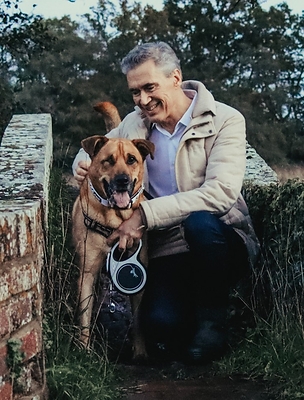
PD: They are all precious initiatives, each unique in its own right. The Purcell School for Young Musicians is an amazing institution with a vibe you can't experience anywhere else. Without the school, music colleges would face a severe lack of new students. A visit is an experience even a hardcore music lover won't forget. As long as live experiences of the arts are the only secure remedy for dementia-affected people, ArtsForDementia is an urgently needed small organisation that trains arts facilitators, founded by Veronica Franklin-Gould MBE. Under the baton of Maestro Matthew Taylor, the relatively young Farnham Sinfonia concert society brings top-notch symphonic culture to the countryside community and fills a real gap. Closest to my heart is Blind Dog Rescue UK, a small charity already awarded and run by three ladies who work extremely hard after their daily jobs to help the most vulnerable animals. I am a widower and live with a large rescue dog who is completely blind. Blindness in dogs is completely different to blindness in us. He creates a 3D space in his mind, like an aquatint painting. All sorts of sensory information are his coordinates, and when he was young, he left for hunting, a habit of a stray which was difficult to eradicate because he knows who he is! Blindness is also a magnifier that strengthens the dog's analytical apparatus and our bond to an unbelievable extent. The English Chamber Orchestra, the CEO and also the extremely engaged trustees under Hugh MacDougald fulfil an absolutely important task. Symphonic chamber music is a common denominator between the spirituality of the medieval period, which ended philosophically around 1750, with Bach's death, and the belief in nature, which has been the core idea of 'symphonies.' It is a period-overlapping and -unifying product that mirrors the coordination of the magisteria (analysis and sensory experience) and proves that music is a necessity for our reality perception. At this point, the ECO is unique and will always sell. Everyone working for these charities is, in my view, a hero who actively fights against the odds and makes the world better.
AR: A quarter of a century ago, you were adopted by the former German monarchy. You are of German-English heritage and hold both passports. What are your views on our monarchy?
PD: I advocate nobility as an obligation to serve the community. With their absolute willingness to serve their people, the British royal family is an amazing role model. While even the Pope, who represents Christ on Earth, retires, like Benedict XVI, they actually work until they can no longer do so. Our king is rightly loved for what he does for all of us. I may not be completely neutral with that because I have fond memories of meeting Charles now and then, once for tea at Clarence House, in the context of the charities.
Incidentally, from an epistemological perspective, the nature of the two-part parliamentary monarchy can be represented and explained through the coordinated magisteria of (parliamentary) analysis and (existential) experience, and is therefore the healthiest constitution, reciprocal to our consciousness constitution. Epistemologically, the non-analytical value of the monarchy can be described in clear terms. This also makes transparent why the House of Lords, which has just opened itself up to society, is the living link between the two approaches to reality and is therefore itself invaluable. With the monarchy, which, in terms of objective significance for the individual, essentially surpasses even Parliament, Great Britain possesses an enormous treasure.
AR: Your new epistemological study, written in German, on the transition from Baroque to Romanticism, which sheds light on our modern worldview and also on the particularities of British society, will be published in October – as all of your academic studies under your former name, Markus von Hänsel-Hohenhausen. Thank you for the interesting conversation!
Interview: Anne Robertson, Citrus Tree Productions Ltd
Portrait: © August von Goethe Literaturverlag
Photo with dog: © Natalie Corbett
Media contact: elvijs@sigulp.co.uk
 View original content to download multimedia:https://www.prnewswire.co.uk/news-releases/prince-donatus-of-hohenzollern-discusses-the-english-chamber-orchestras-future-ahead-of-royal-gala-302897538.html
